How an architect learned to grow apps
i help AI app founders hit 1M users without burning cash.
"You can't connect the dots looking forward; you can only connect them looking backwards. So you have to trust that the dots will somehow connect in your future. Because believing that the dots will connect down the road will give you the confidence to follow your heart even when it leads you off the well worn path; and that will make all the difference."
Steve Jobs, Apple
a live example of how the dots connect when you look at them backwards.
2 million users. $0.02 CAC. 11 months.
that's the line people know me by.
what nobody tells you is that i got there by failing at almost everything else first, and that most of the work that actually moved the number was boring.
here's the whole thing, in order.
The blueprint years
i trained as an architect in new delhi. designing and executing building exteriors, interiors, stadiums. the real ones.
i loved the drawing. i loved the moment the idea locks into place on paper.
then i learned what comes after the drawing: three years of permits, contractors, delays, and a building that opens long after you stopped caring about it.
i'm a guy who needs to see if the idea worked or not. architecture told me to wait three years.
in 2019 i paused it.
not quit. paused. the practice is still there. i just needed to find out what the same discipline felt like on a shorter clock.
ps. i now help architects scale their own practice with lead generation and automations.
The fastest feedback loop I'd ever felt
in 2020 i found a startup building an EEG neurofeedback wearable. a brain tracking device nobody had heard of.
i reached out to the founders and started as a growth intern. design, social content, organic acquisition, whatever needed doing.
within weeks i could see it. someone landed on the site. someone bought. someone else bought because of a video i created that morning.
three years of waiting had become three hours.
then the company was featured on Shark Tank, the episode aired, and the traction went vertical.
i remember thinking: this is it. this is the thing i've been looking for.
i was wrong about what "the thing" actually was. it took two more startups to find out.
Teaching 13 year olds to buy stocks
next was fintech. financial education for kids aged 13 to 18.
the idea was good, and it was personal. i got financially educated late. i wanted the thing i didn't have.
kids could buy and sell real stocks. every trade routed to their parent's app for approval or rejection. the parent could see not just what the kid bought, but how the kid was thinking.
i came in as the founding growth person. we ran animated explainers: you go to mcdonald's and buy a burger. now buy a share of mcdonald's. when they sell more burgers, you get paid.
we scaled it from zero to 10,000 users.
and then i pulled the retention report.
Day seven
day 7 retention: 5 to 6 percent.
meaning: 94 out of every 100 kids we acquired were gone inside a week.
i checked it again. then again. the funnel wasn't broken. the ads weren't broken. the product wasn't broken.
teenagers were just busy. school, homework, exams, friends. investing was a nice idea for a tuesday and gone by wednesday.
we had a great product nobody came back to. that is the single worst position a consumer app can be in, because everything looks fine until it doesn't.
i had to walk into a room with the founders and the investors and say the model was declining.
that was the hardest meeting of my career and the most useful one. we pivoted the business we had and rebuilt it as something else entirely.
we replaced the stock market with a professor.
The professor
same kids. completely different job to be done.
an AI mentor students could video call and talk to like a real teacher. homework, doubts, exam panic, at 11pm, on demand.
this became ZuAI. in the US we renamed it professor curious.
the mascot came straight out of architecture. i planned it in figma, broke it into components, animated it. the same skill that renders a building elevation renders a character.
then came the real problem: you cannot target anyone under 18 on any ad platform. no interest based targeting, no lookalikes, nothing.
the only door open was organic. and i had no idea which door it was.
Under 18
i shot 30 videos in one month to find out. i couldn't afford creators, so i told my college junior to record one, because he was my junior and he couldn't say no.
two or three videos started to move. the rest died.
so i went and looked at what the two had in common.
the winner opened with "under 18" on the thumbnail. that was it. that was the entire secret. kids who are under 18 want to watch content made for people under 18.
the line was: if you're under 18 and you still think the dog ate my homework excuse works, no bro, just use this app, finish your homework, and increase your playtime.
tell me which thirteen year old says no to more playtime.
that video did 2.1 million views and 120,000 users. the next one did a million views and 40,000 users.
here's the part people miss. we uploaded the winners as unlisted videos on youtube and ran them as ads, so only the target audience ever saw them. the public channels stayed pure: free, funny, genuinely useful content. the acquisition machine ran underneath, invisible.
that video was uploaded three years ago. it is still the best performing ad in the account.
so we took the exact same thing to meta. and it broke.
Users who never paid
meta gave us installs. lots of them. almost none of them paid.
we killed it and moved to tiktok, with a different structure: five separate accounts, one creator each, $1,000 per creator for 30 videos in 30 days.
the first creator got views and nothing else. we replaced him. the second was a girl posting near identical videos, casually on a video call with the professor, roughly a thousand views each, week after week.
then one of them did 2 million.
i pulled it apart frame by frame and the difference was this: she wasn't showing the app. she was doing a normal thing in her normal day, talking to the camera while eating fruit, and the app happened to be there.
the moment we stopped advertising, it started working.
we downloaded that video, ran it as an ad at $20 a day, then $50, then $100, then $200, and scaled the channel to $10,000 a month.
that's the version that ends up in the case study. here's the version that doesn't.
The $2,000 video that got 12,000 views
around the same time, we decided to do it properly. we found the top creator in the education space and paid him $2,000 for one video.
it got 12,000 views. close to zero users.
we failed, miserably, with the most expensive asset in the entire account, while a video shot by my broke college junior was doing millions.
that's when i stopped believing in big influencer collabs and production value, and started believing in volume.
then i tried something i probably shouldn't have.
Claim the energy
i went after fear instead of FOMO.
exam season. dark, occult flavoured videos telling students that if they wanted to claim the good marks energy, they had to comment "claiming the energy."
and they did. thousands of them. the comment section filled up with kids claiming the energy before their exams.
we spun up a whole separate channel for it.
organic became our free testing ground. anything that won there got promoted to a paid ad. nothing got budget until it had already earned attention for free.
11 months later: 2 million users, $0.02 blended CAC, 35,000 daily active users, 10 percent converting to paid, ranked 33rd globally on the app store and top 50 in education on play.
and the cheapest channel of all was one i almost couldn't crack.
40 banned accounts
reddit.
everyone knows their users are there. everyone gets destroyed trying.
i got 40+ accounts banned figuring out what reddit actually enforces, as opposed to what the sidebar says it enforces.
the lesson: posting and commenting reads as promotion no matter how carefully you write it. direct messages don't.
so we ran 10 accounts, 10 messages per account per day. 100 real conversations a day.
reply rate: 30 to 35 percent. the highest of any channel i've ever run, on any platform, ever.
it doesn't scale. it doesn't need to. it's how you get your first 10,000 users and, more importantly, the exact words your customers use to describe their own problem.
paid tells you what converts. reddit tells you why anyone cares.
i wrote the whole SAFE playbook from those 40 bans and published it free.
and then, with the app at 2 million users and the best numbers of my life, i quit.
The part where I left
i'd been there two years. everything was working. $20K to $50K MRR from the US. i knew the account, the channels, the creators, the whole machine.
which was the problem.
i was comfortable. i was attached. i'd stopped asking what the next hard thing was, and started defending what already worked.
so i paused it. same way i paused architecture.
after i left, the company pivoted acquisition to target parents instead of students. parents converted faster, then charged back, cancelled, and left one star reviews on the app store. the MRR story got harder, not easier.
i still think convincing the student to convince the parent was the right path.
i also think that's exactly the kind of call you only make correctly when you're in the account every day, which is why i work the way i work now.
$10,000 a day
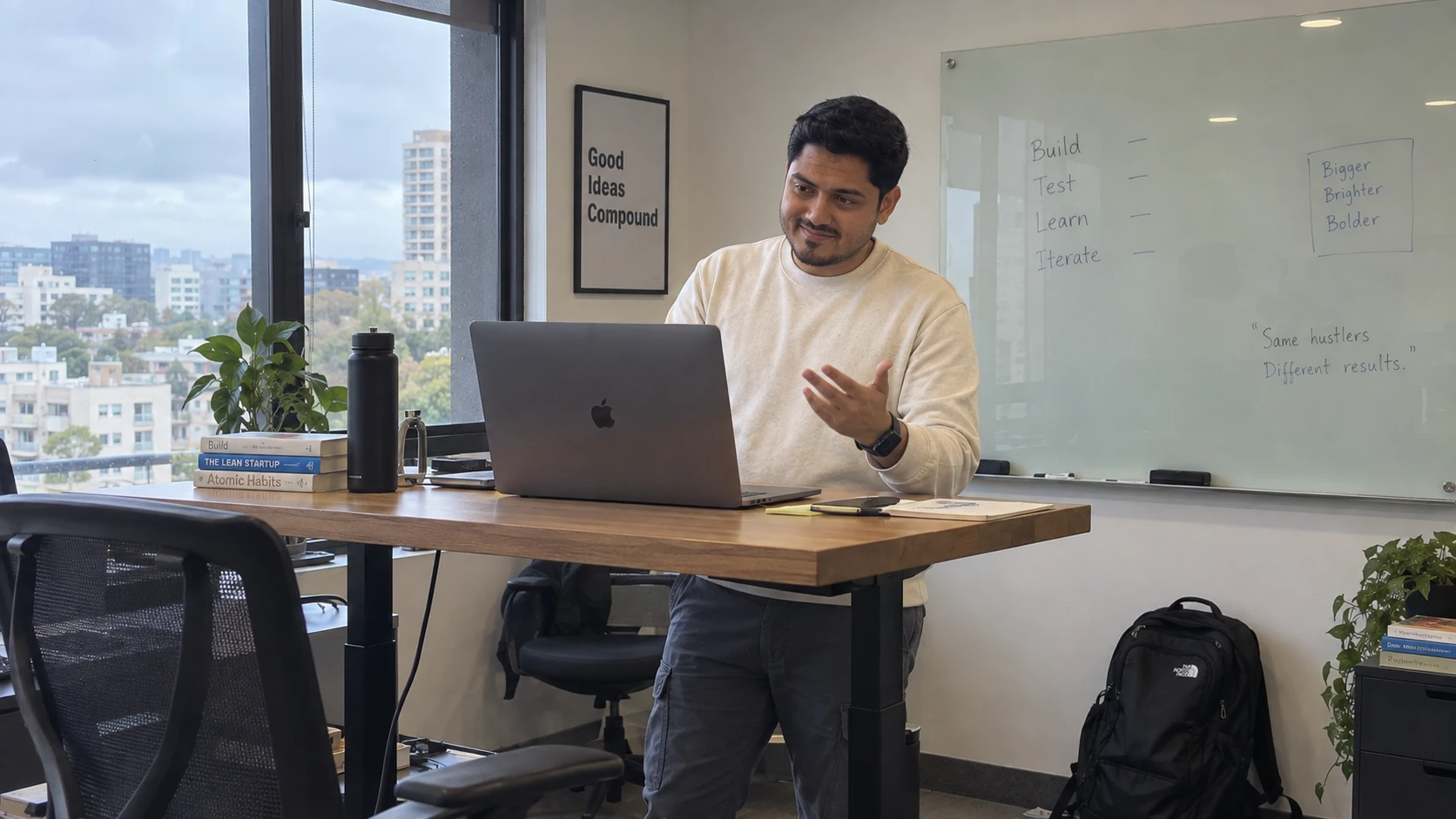
today i'm embedded with a small number of consumer AI founders in the US and europe.
the scale of the testing is the part that surprises people. for one client i'm running about $10,000 a day, roughly $300,000 a month, shipping about 150 new creatives a month, cut into close to 1,500 ad variants, in english, spanish, portuguese and chinese.
they are not beautiful. they're barely edited. ugly ads consistently beat polished ads, and i have three years of spend saying so.
every sunday, the new batch goes out. every monday, the winners move into the scaling campaign and everything else dies.
a few things i've learned spending that much:
- $50 spread across the entire US teaches you nothing. $50 spread across california teaches you something by wednesday.
- spanish converts cheaper than english in the US market, and most founders never test it.
- if you see a competitor running the same ad since june, it isn't necessarily winning. we keep dead ads alive at $1 a day specifically so competitors copy the wrong thing.
How I actually work
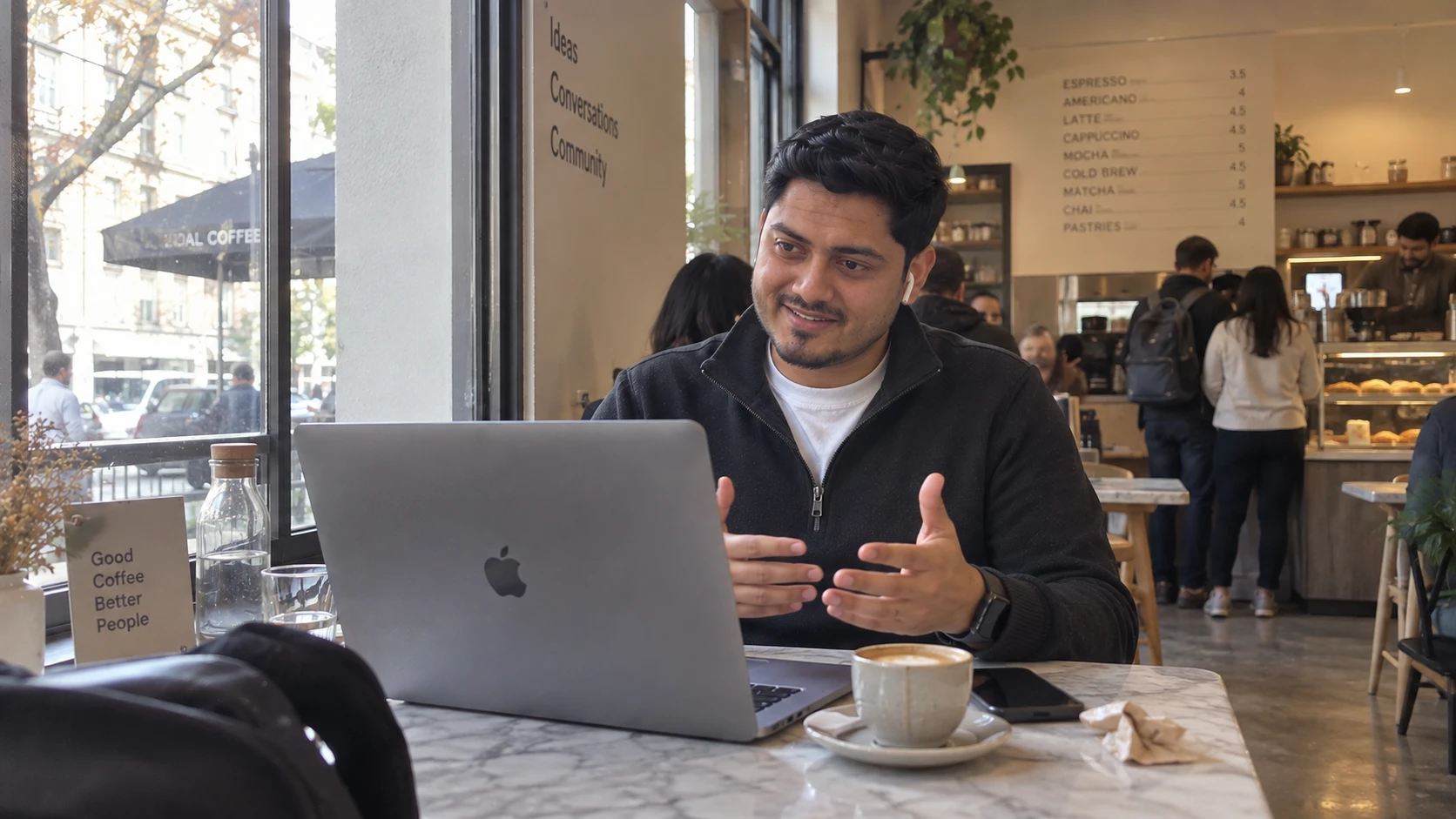
three founders at a time. six months each. monthly retainers.
month one is creative production. month two is shipping it and running paid to find your real baseline CAC. month three onward is one job only: driving that number down.
not an agency. no account managers, no onboarding theater, no deck that ends the engagement. when i take on a startup, it's in my head at 3am, which is genuinely the reason i cap it at three.
before any of that, there's a free call where i go through your funnel, your creatives, your channels, and tell you what i'd fix first. no pitch. yours either way.
i also publish everything. the reddit playbook, the UGC playbook, the paid playbook, and 20 free calculators that run in your browser with no email form in front of them. one of them is built specifically to tell you not to hire a growth marketer yet, including me, if you haven't measured retention.
i don't want to fish for you. i want you to stop starving.
The boring part
a news headline about me recently said most of the work was boring.
that's the most accurate thing anyone has written about what i do.
there was no viral moment. there was a spreadsheet, 30 videos a month, a junior who owed me a favour, 40 banned accounts, a $2,000 video that flopped, one thumbnail that said "under 18", and someone willing to do the same unglamorous loop every single week until the number moved.
analyze. execute. iterate. repeat.
i learned that drawing buildings. it turns out it works on apps too, just faster.
want the honest read on your growth stack? free live breakdown.
no pitch deck. yours either way.