India vs SF Growth Hire for Startups in 2026
Deciding between an India or San Francisco growth hire for your startup? I break down costs, iteration speed, and user focus to help you choose wisely.

Does it make sense to hire someone in India vs San Francisco for growth if my startup has users in both markets?
TL;DR: Hiring for growth in India makes sense if your primary user base is in India, you need cost efficiency, and you can manage time zone differences. San Francisco is better if your core users are US-based, you need immediate, high-bandwidth collaboration, and your budget allows for it. Ultimately, the right hire depends more on their CAC discipline and channel fit with your target users than their location.
As a founder, you’re constantly weighing tradeoffs. Growth is no different. When your startup has users in both India and the US, the question of where to find your next growth hire becomes complex. I’ve operated a consumer AI product, ZuAI, scaling it from 10,000 to 2,000,000 users with a $0.02 blended CAC, managing up to $300k/month in ad spend across TikTok, Reddit, Meta, YouTube, and LinkedIn. This experience has given me a clear perspective on what truly drives growth, and it’s often not about geography.
What “growth hire” actually means before you pick a location
Before we even talk about India or San Francisco, let’s get clear on what you mean by “growth hire.” This isn’t just a title; it’s a specific function. Are you looking for someone to run paid ads, build communities, optimize conversion funnels, or a full-stack operator who can do a bit of everything?
Paid acquisition vs organic/community vs full-funnel operator, location matters differently for each
If you need a paid acquisition specialist, their ability to operate within specific ad platforms (Meta, TikTok, Reddit) and understand the cultural nuances of those audiences is paramount. A skilled operator can run US campaigns from anywhere, but real-time iteration and understanding subtle ad performance cues often benefit from closer proximity to the target market’s daily rhythm.
For organic growth or community building, local cultural understanding becomes much more critical. Building a community on an Indian platform like Sharechat requires a different approach than cultivating one on Reddit. A full-funnel operator needs a blend of these skills, making the decision even more nuanced. My own work scaling ZuAI involved a heavy focus on paid acquisition across diverse platforms, where understanding the ad platform mechanics and user psychology was key, regardless of my physical location.
The real cost difference: India vs San Francisco growth hires
Let’s address the elephant in the room: cost. Yes, there’s a significant difference in salary expectations, but you need to look beyond the raw numbers.
Salary/contractor cost benchmarks
Based on data from sources like Levels.fyi and Glassdoor (verify current figures before publishing), a growth marketer in San Francisco can command a base salary ranging from $120,000 to $200,000+ per year, often with significant equity. In contrast, a comparable growth marketer in India might expect a salary ranging from $25,000 to $60,000 per year. For contractors, the hourly rates follow a similar pattern. AngelList and Wellfound data also reflect these disparities.
It’s tempting to jump at the lower number, but this is where founders often make mistakes.
Hidden costs of cheap hires (management overhead, time zone friction, iteration speed)
A “cheap” hire can quickly become expensive if they require constant management, struggle with communication, or slow down your iteration cycles.
- Management overhead: If you spend 10-15 hours a week managing a lower-cost hire, is that truly saving you money? Your time as a founder is your most valuable asset. The initial cost saving can be quickly eroded by the time you invest in training, clarifying tasks, and correcting mistakes.
- Time zone friction: This is a silent killer for growth. If your growth hire is 12.5 hours offset from your primary US user base and your core team, real-time collaboration becomes impossible. Quick campaign adjustments, A/B test analysis, or responding to unexpected performance shifts can be delayed by a full day.
- Iteration speed: Growth is an iterative process. You launch, you learn, you adjust. If each iteration cycle is extended due to communication delays, your ability to find product-market fit or scale efficiently is severely hampered. My experience running ad spend for ZuAI meant being able to make decisions and adjustments within hours, not days.
Where your users actually are changes the math
This is perhaps the most critical factor. Your growth hire needs to understand your users intimately.
If most users are US-based but growing in India, content/localization argument
If 80% of your current active users are in the US, but you see potential for India, your first growth hire should likely be US-centric. They need to understand US consumer behavior, cultural nuances, and the specific channels where your US users spend their time. If you later decide to heavily target India, then a localized hire becomes essential for content, messaging, and channel-specific expertise.
If you’re testing channels that are geography-specific (e.g., Reddit/TikTok US culture vs India-specific platforms like Sharechat, Josh)
Reddit, for example, is heavily US-centric in its culture and user base. Running successful campaigns or building communities there requires an understanding of its unique dynamics. TikTok, while global, has distinct cultural trends in different regions. An India-based growth hire might excel on platforms like Sharechat or Josh, which are deeply integrated into the Indian digital ecosystem. They would bring invaluable insight into local slang, trends, and user behavior that a US-based marketer might miss.
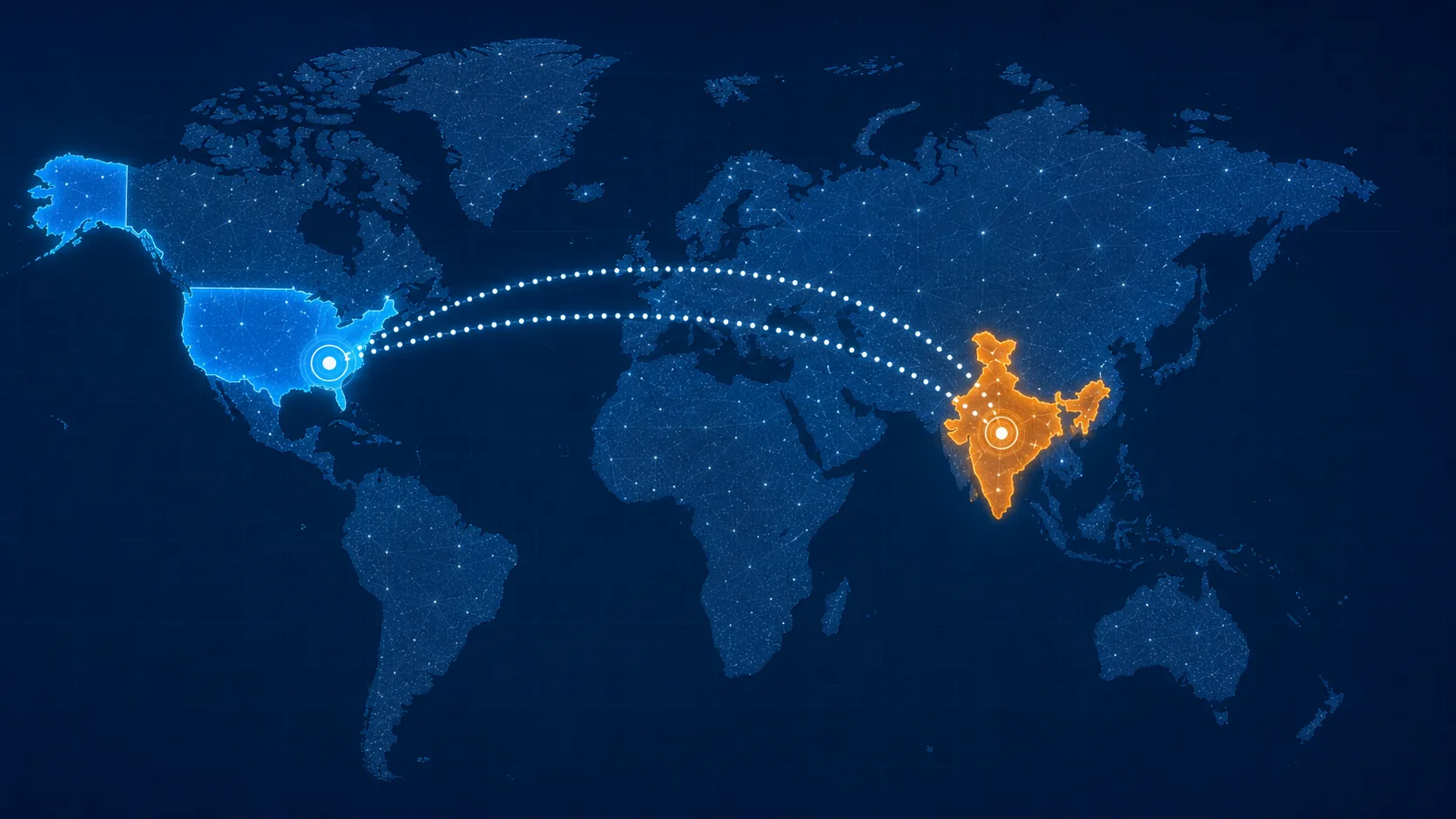
Time zone overlap and iteration speed: the underrated variable
This cannot be overstated. Growth is not a set-it-and-forget-it function.
Why growth is a same-day-turnaround discipline, not a handoff-and-wait discipline
Imagine running a paid ad campaign. You launch it, and within hours, you see a problem: high CPA, low click-through rate, or an unexpected audience response. A growth operator needs to identify this, analyze the data, and make adjustments that same day. If you’re waiting 12 hours for a response, then another 12 hours for action, you’re burning through budget and missing critical windows for optimization.
When I was scaling ZuAI, managing up to $300k/month in ad spend, being able to dive into the ad accounts and make real-time changes was non-negotiable. My workflow automation with n8n and Claude helped, but human oversight and quick decision-making were paramount.
What breaks when your growth hire is 12.5 hours offset from your user base and your team
- Real-time campaign optimization: Delays mean wasted ad spend and missed opportunities.
- A/B testing velocity: Slower iteration means it takes longer to find winning creatives or audiences.
- Team collaboration: If the founder, product team, and growth person are rarely online at the same time, critical discussions and strategic pivots are hampered.
- Crisis management: Ad accounts get flagged, campaigns go rogue, competitors launch new features. You need someone who can react quickly.
Comparison Table: India Growth Hire vs San Francisco Growth Hire vs Hybrid/Remote Operator
| Feature | India Growth Hire | San Francisco Growth Hire | Hybrid/Remote Operator (like Ar.Bhavesh) |
|---|---|---|---|
| Cost | Low (typically $25k-$60k/yr salary) | High (typically $120k-$200k+/yr salary) | Variable (project-based, retainer, often competitive with SF full-time but without benefits overhead) |
| Time zone overlap w/ US users | Minimal (10.5-13.5 hour difference) | High (direct overlap) | Moderate to High (often works async or adjusts hours for key overlap) |
| Channel expertise (TikTok/Reddit/Meta vs India-specific) | Strong on India-specific platforms (Sharechat, Josh), potentially good on global platforms if experienced with US audiences. | Strong on global platforms (TikTok, Reddit, Meta) with US audience nuances. | Strong on global platforms (TikTok, Reddit, Meta) with US/global audience understanding. |
| Iteration speed | Slower due to time zone difference and potential communication lag. | Faster due to direct overlap and real-time collaboration. | Can be very fast due to focus on results, clear communication, and workflow automation. |
| Best fit for stage (seed vs Series A) | Seed (if budget is extremely tight and primary market is India), Series A (for India-specific expansion). | Seed (if US market is primary and budget allows), Series A (for scaling US growth). | Seed (if founder needs hands-on execution without full-time commitment), Series A (for strategic oversight and execution). |
| Risk factors | Communication barriers, cultural misunderstandings, high management overhead, slower iteration. | High cost, potential for “agency-like” thinking if not truly embedded. | Finding the right fit, ensuring clear scope, managing expectations for solo capacity. |
**Want this done for your startup?**I help early-stage SaaS founders get found by AI assistants and real buyers.
What actually determines the right hire, a decision framework
Forget location for a moment. The right hire is about aligning their skills and working style with your immediate needs.
Decision rule based on: where 80% of your current paying/active users are, what channels you’re scaling, and your stage (seed vs Series A)
- Where are 80% of your current paying/active users? If it’s the US, prioritize a US-centric understanding. If it’s India, prioritize an India-centric understanding. Your first growth hire needs to double down on your existing traction, not chase new markets prematurely.
- What channels are you scaling? If Reddit and US TikTok are critical, you need someone who breathes those platforms in a US context. If it’s India-specific platforms, then an India-based expert is non-negotiable.
- What’s your stage?
- Seed stage: You need raw execution power and extreme CAC discipline. You can’t afford wasted ad spend or slow iteration. If your budget is tight, consider a highly skilled contractor or a remote operator who can hit the ground running. You might also consider exploring my [growth playbooks](link to playbooks page) to get started on your own.
- Series A: You have more budget, but the stakes are higher. You need someone who can scale existing channels and explore new ones efficiently. This is where the cost-benefit of a San Francisco hire versus a highly skilled remote operator becomes a clearer calculation.
Case example: what this looked like scaling ZuAI
When I was scaling ZuAI from 10,000 to 2,000,000 users at a $0.02 blended CAC, my operating model was that of a solo growth operator. I was Bay Area-based, but my focus was on the global user base. This meant:
- Channel focus: I managed up to $300k/month in ad spend across TikTok, Reddit, Meta, YouTube, and LinkedIn. These are global platforms, but each has specific user behaviors and ad mechanics that I had to master. My location in the Bay Area meant I was steeped in the US startup and consumer culture, which was invaluable for understanding the primary user base for ZuAI, even as it scaled globally.
- CAC discipline: The $0.02 blended CAC wasn’t an accident. It came from relentless testing, optimization, and a deep understanding of the ad platforms. This required me to be hands-on, inside the ad accounts daily, making rapid adjustments. This level of iteration speed is hard to achieve with significant time zone delays.
- Workflow automation: I used tools like n8n and Claude for workflow automation. This allowed me to punch above my weight as a solo operator, handling vast amounts of data and automating repetitive tasks, freeing me up for strategic decision-making and creative development. This highlights that a skilled operator, regardless of location, can amplify their impact with the right tools.
My experience scaling ZuAI, which you can read more about in [the ZuAI case study](link to case study page), showed me that direct access to the ad accounts and the ability to iterate quickly were far more important than where I sat. My operating model allowed for flexibility and intense focus on results, which is often what early-stage startups need most.
FAQ
Is it cheaper to hire a growth marketer in India than in San Francisco? Yes, generally, the salary expectations for a growth marketer in India are significantly lower than in San Francisco, often 1/3 to 1/5 of the cost.
Can someone based in India run US-facing paid ads (TikTok, Meta, Reddit) effectively? Yes, they can technically run the ads. However, their effectiveness will depend on their deep understanding of US consumer behavior, cultural nuances, and their ability to iterate quickly despite time zone differences. The technical skill might be there, but the market intuition can be a challenge.
Should my first growth hire be local or remote if I’m a seed-stage startup? For a seed-stage startup, your first growth hire should prioritize impact and iteration speed over location. A highly skilled remote operator who can align their working hours with your primary user base and team might be a better fit than a local hire who lacks the specific skills you need.
What’s the actual cost difference between an India-based growth hire and a Bay Area one? Based on current benchmarks (e.g., Levels.fyi, Glassdoor), a Bay Area growth marketer’s salary can range from $120,000 to $200,000+ annually, while an India-based one might range from $25,000 to $60,000 annually. Remember to factor in hidden costs beyond salary.
Does time zone overlap matter more than cost when hiring for growth? For growth roles that require rapid iteration, real-time campaign optimization, and close team collaboration, time zone overlap often matters significantly more than the raw cost difference. Delays can lead to wasted budget and missed opportunities, negating any salary savings.
When does it make sense to hire two growth people, one in each market, instead of one? It makes sense to hire one in each market when your user bases in both the US and India are substantial and require distinct, localized strategies and channel expertise, and you have the budget to support two full-time roles without sacrificing iteration speed or quality. This is typically a Series A or later decision.
Ultimately, the best growth hire is the one who understands your users, can operate effectively within your chosen channels, and can iterate at the speed your startup demands. Don’t let geography be the sole deciding factor. Focus on competence, cultural fit, and the ability to execute.
If you’re grappling with these decisions and want to build a growth engine that actually works, [work with me](link to services/contact page). Let’s talk Growth.