How Early Startups Find User Acquisition Channels
Learn how early-stage startups actually figure out which user acquisition channels work. Ar.Bhavesh Panse shares a structured framework for testing
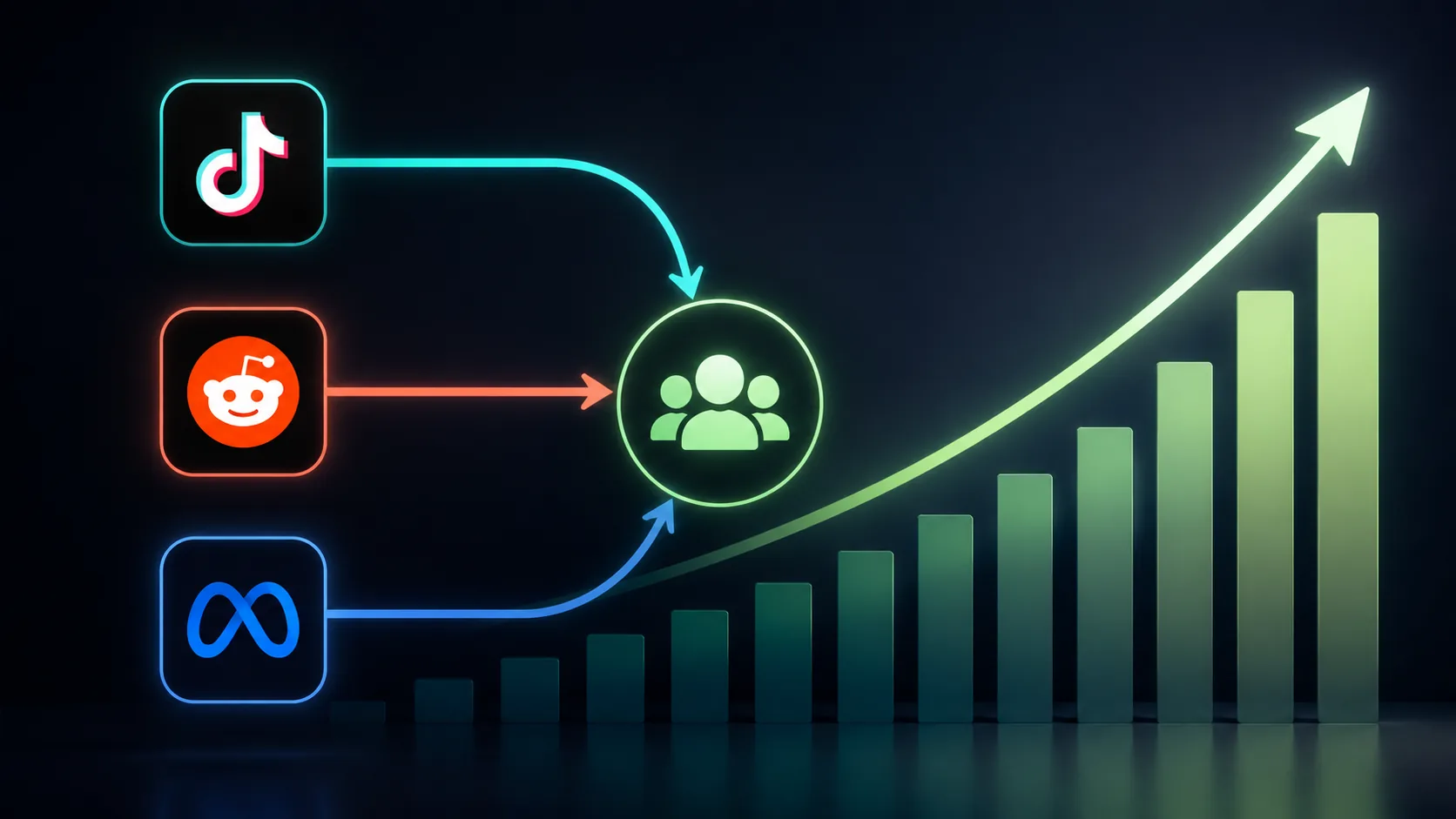
TL;DR: Early-stage startups figure out winning user acquisition channels by running small, parallel tests across 2-3 channels, setting clear kill criteria (CAC, activation) upfront, and rapidly iterating on creative volume to find signal. I double down only on channels showing early signs of efficient user acquisition and retention, rather than guessing or copying others.
Why Most Early-Stage Startups Guess Wrong on Channels
I’ve seen it countless times. A founder launches a great product, then stares at a blank slate, wondering where to get users. The first instinct is often to guess. Maybe they pick TikTok because “everyone’s on TikTok,” or LinkedIn because “it worked for that other B2B SaaS company.” This usually leads to wasted budget and frustration.
Why do founders guess?
- Founder Bias: You might personally use Instagram, so you assume your users do too. Or you’re convinced your product is so unique it needs a “thought leadership” content strategy from day one. Your personal preferences often cloud objective channel selection.
- “What Worked for [Famous Startup]” Copying: It’s tempting to look at a unicorn’s growth story and try to replicate it. But what worked for Calendly in 2015 with a different market, different product, and different competitive landscape won’t necessarily work for your AI tool in 2026. Their context is not your context.
- No Testing Budget Discipline: Many founders treat channel testing like throwing spaghetti at a wall. They spend a little here, a little there, without a clear budget, time limit, or success/failure metric. This isn’t testing; it’s hoping. As Y Combinator’s Startup School often emphasizes, growth is a science, not an art. You need to approach it systematically.
The Actual Framework for Testing Acquisition Channels
Finding your channels isn’t about magic. It’s about a structured, data-driven process. When I scaled ZuAI to 2M users with a $0.02 blended CAC, it wasn’t by accident. It was through relentless testing and clear decision-making.
Step 1, Match Channel to Product Type
Before you spend a dime, think about your product and your ideal user. This isn’t about guessing; it’s about making educated hypotheses.
- Short-form video (TikTok, Reels): Best for highly visual consumer products, viral loops, entertainment, or products that solve an immediate, relatable pain point with a quick demo. Think consumer apps, games, or direct-to-consumer goods.
- Community-driven (Reddit, Discord): Ideal for products targeting niche communities, early adopters, or users actively discussing problems your product solves. Great for developer tools, specific hobby apps, or products requiring detailed explanation and discussion.
- Paid Performance (Meta, Google Search, YouTube): Versatile. Meta (Facebook/Instagram) is strong for broad demographic targeting, interest-based targeting, and visual products. Google Search is for users with high intent (searching for a solution). YouTube is powerful for visual demos, tutorials, and reaching specific audiences through content targeting.
- Professional/B2B (LinkedIn): Obvious choice for B2B SaaS, professional services, or products targeting specific job titles and industries.
Don’t try to force a square peg into a round hole. If your product is a complex B2B analytics tool, TikTok UGC might not be your first bet (though creative approaches can sometimes surprise).
Step 2, Set a Real Testing Budget and Time-Box It
This is where discipline comes in. A test isn’t open-ended.
For an early-stage startup, your initial channel testing budget might be anywhere from $500 to $5,000 per channel, per month. This isn’t about getting thousands of users; it’s about getting enough data to make a decision.
Contrast this with scaling. When I manage $300k/month in ad spend, our “testing” is more about optimizing existing channels and exploring adjacent audiences. For an early-stage founder, your goal is simply to find one channel that shows promise.
Time-box your tests. Give each channel 2-4 weeks to show initial signal. If you don’t see anything promising, move on. Don’t let a channel bleed money because you’re “sure it will work eventually.”
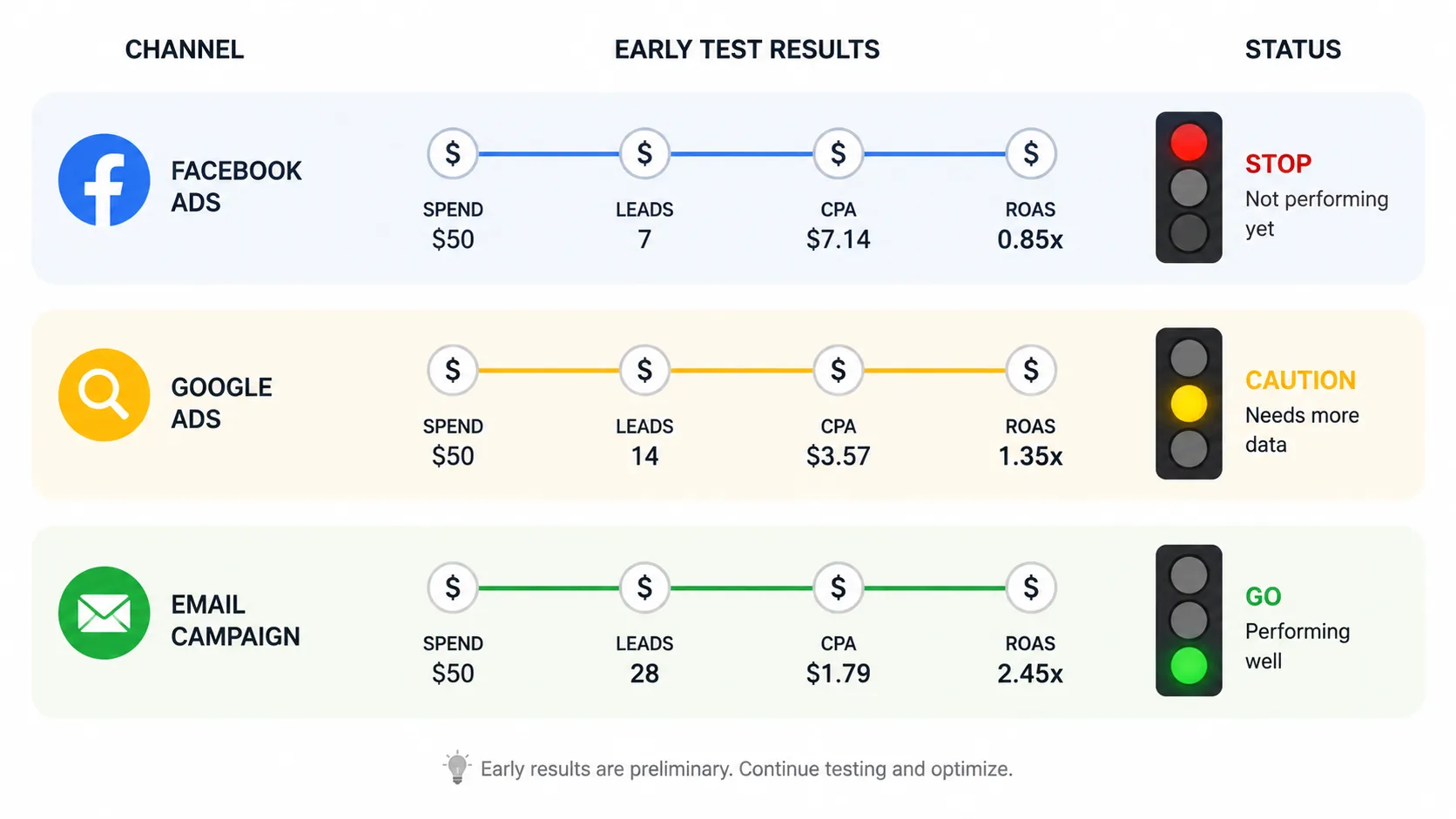
Step 3, Define Kill/Scale Criteria Before You Spend
This is non-negotiable. Before you launch your first ad or post, write down what success looks like and what failure looks like.
- CAC Ceiling: What’s the maximum you’re willing to pay for a user? For ZuAI, our blended CAC eventually hit $0.02, but in early testing, we had higher ceilings to simply get any users and validate the core concept. A consumer app might tolerate $5-10 CAC initially if retention is strong, while a B2B SaaS with a $500 monthly subscription might tolerate $200-500 CAC.
- Activation Rate: Are users not just signing up, but actually using your product? Define your core activation event (e.g., completing onboarding, inviting a teammate, making a first purchase). A channel might bring cheap sign-ups, but if none activate, it’s a bad channel.
- Payback Period: How long does it take for a user to generate enough revenue to cover their acquisition cost? This is critical for sustainable growth.
Without these metrics defined, you’re just spending money without a goal.
Step 4, Run 2-3 Channels in Parallel, Not Sequentially
Don’t test TikTok for a month, then Meta for a month, then Reddit. That’s too slow. Your goal is to find a channel that works, not the perfect channel.
Run 2-3 of your most promising hypotheses in parallel. This allows you to compare performance directly and gather data faster. You’ll quickly see which channels are struggling to get any traction, and which ones are showing glimmers of hope.
Step 5, Let Creative Volume Do the Signal-Finding
This is huge. Many founders launch one ad and declare a channel “doesn’t work.” That’s like trying one recipe and saying a cuisine is bad.
When I scaled ZuAI, we were testing 25+ creatives per week. This wasn’t just about finding the “best” creative; it was about understanding what messages resonated, what visuals caught attention, and which calls to action drove results.
Different creatives unlock different audiences within a channel. A channel might seem dead, but one strong creative can completely change its performance. I use tools like n8n for automation and Claude for creative ideation to scale this process. Don’t rely on one or two ideas. Flood the channel with variations.
**Want this done for your startup?**I help early-stage consumer AI founders escape the “great product, zero distribution” trap.
Channel-by-Channel Breakdown for Early-Stage Startups
Here’s a quick overview of common channels and what to expect:
| Channel | Best for | Typical CAC Range/Cost Signal | Time to Signal | Risk