Get Your Startup Chosen by AI Shopping Agents in 2026
Learn how to make your startup's products machine-readable for AI shopping agents. Optimize for agentic commerce and gain a competitive edge.
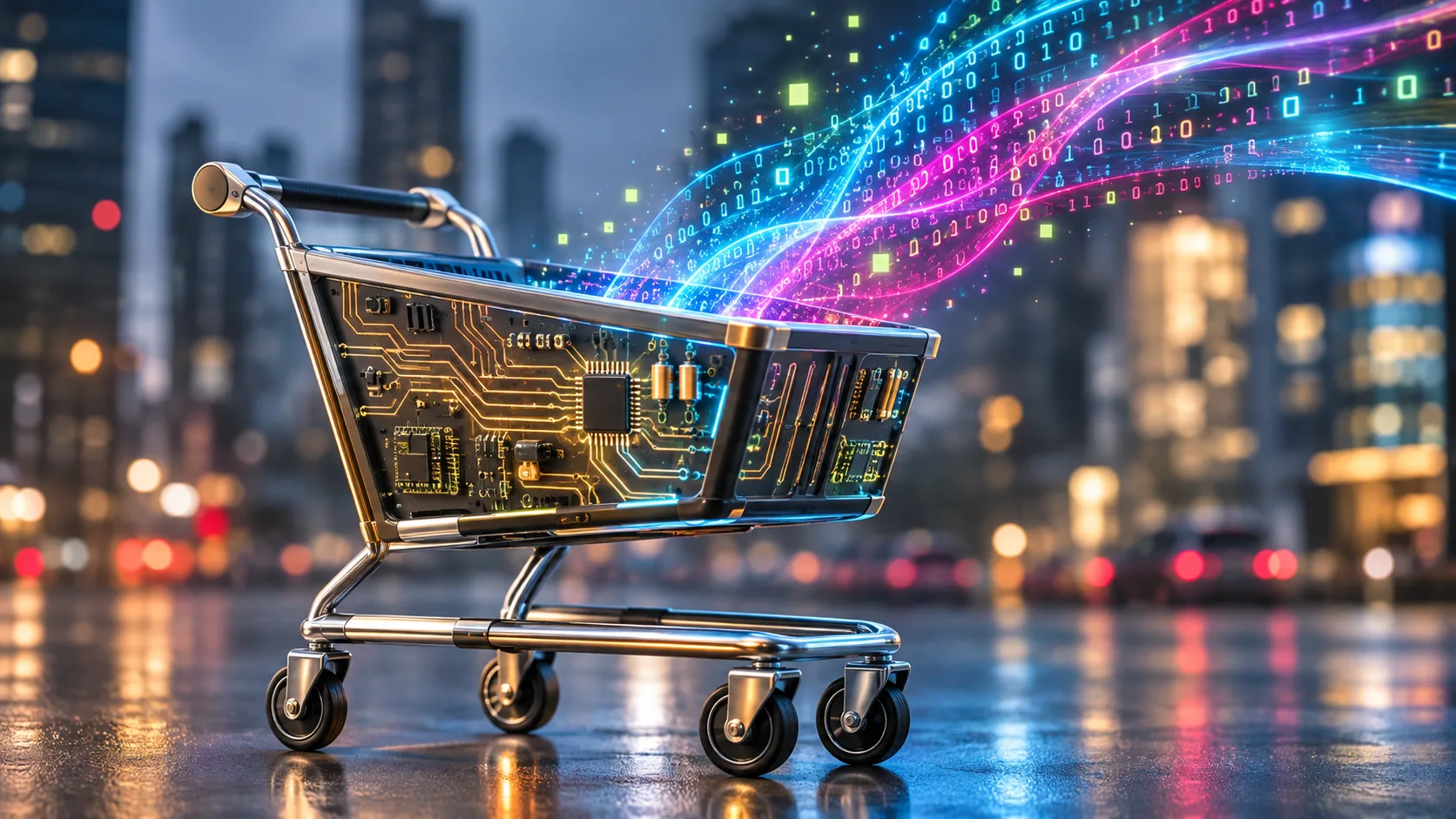
I talk to a lot of founders like you, Alex. You’re building something amazing, but you’re also swamped trying to get it in front of people. Meta, Google, TikTok, it’s a constant grind. Now, you’re hearing about “AI agents” and “agentic commerce” and wondering if it’s another thing you need to worry about.
Let me be direct: this isn’t a future problem. It’s happening now. To get your startup discovered and chosen by AI shopping agents, you must make your product’s value proposition, pricing, and availability perfectly machine-readable through structured data, and design a frictionless, API-first onboarding flow. With $944 billion in consumer spend being influenced by agentic AI this year, this is a critical distribution channel you need to optimize for today. Think of it as the new SEO, but for algorithms.
Why Is Agentic Commerce Suddenly a Critical Channel?
This isn’t just a theoretical trend anymore. It has moved from concept to a measurable, high-value channel in the last few months. Early movers will capture a disproportionate share of the market before it gets saturated.
WARC projects that $944 billion of global consumer spend will be facilitated by agentic AI this year. You can find these projections in the “Global Ad Spend Forecasts 2024” report by WARC, published in December 2023. That’s a huge number, and it’s only going to grow. A McKinsey study of approximately 21,000 consumers, “The State of AI in 2023: Generative AI’s Breakout Year” released in December 2023, shows a significant uptick in users delegating purchasing research and decisions to AI agents. People are actively shifting their behavior.
This creates a new discovery problem for you. Your traditional SEO and social ads, designed to reach humans, won’t be as effective at reaching the agent making the decision for the human. The game has changed.
What Do AI Shopping Agents Actually Want?
AI agents are logical and goal-oriented, prioritizing efficiency. They don’t care about your brand story, at least not in the same way a human does. They care about quantifiable data that proves your product is the best solution for their user’s specific request. They parse for facts, not feelings.
Here’s a checklist of what an AI agent prioritizes:
- Price: Is it the best value? This includes the total cost, shipping, and taxes.
- Availability & Speed: Is it in stock? How fast can it be delivered?
- Product Attributes: Does it match the user’s request on a feature-by-feature basis? Think “gluten-free,” “battery life > 10 hours,” “integrates with Slack.” Specifics matter.
- Trust & Social Proof: What is the average review score? How many reviews? Are there credible certifications, like organic or fair trade?
- Friction: How easy is it to purchase? Can the agent complete the transaction via an API, or does it have to navigate a complex, human-oriented checkout flow?
How Can I Make My Product ‘Machine-Readable’ Today? (The Action Plan)
You can take three concrete steps this week to make your startup more discoverable to AI agents. This is your “Agent SEO” (ASO) foundation.
-
Implement Comprehensive Structured Data. This is the single most important step. It’s like adding descriptive labels to your website that only machines can read. Go beyond the basics. Instead of just
Product,name, andprice, use specific schema.org types. For example:<div itemscope itemtype="http://schema.org/Offer"> <span itemprop="priceCurrency" content="USD">$</span><span itemprop="price" content="99.99">99.99</span> <link itemprop="url" href="https://yourproduct.com/product-a" /> <div itemprop="shippingDetails" itemscope itemtype="http://schema.org/OfferShippingDetails"> <span itemprop="shippingRate" itemscope itemtype="http://schema.org/MonetaryAmount"> <span itemprop="value">5.00</span> <span itemprop="currency">USD</span> </span> <span itemprop="deliveryTime" itemscope itemtype="http://schema.org/ShippingDeliveryTime"> <span itemprop="businessDays">3-5</span> business days </span> </div> </div> <div itemprop="review" itemscope itemtype="http://schema.org/Review"> <div itemprop="reviewRating" itemscope itemtype="http://schema.org/Rating"> <meta itemprop="worstRating" content="1"> <span itemprop="ratingValue">4.5</span>/<span itemprop="bestRating">5</span> stars </div> <span itemprop="author" itemscope itemtype="http://schema.org/Person"> <span itemprop="name">a customer</span> </span> <span itemprop="reviewBody">"This product changed my workflow!"</span> </div>The more specific you are, the better an agent can understand and recommend your product.
-
Rethink Your Product Page Content. Write for the agent first, human second. Create a dedicated “specifications” or “data” block at the top of your product page or in a prominent tab. Use clear headings and quantifiable facts. Instead of “Our battery lasts all day,” write “Battery Life: 14 hours (continuous use).” This makes it easy for an agent to extract the key information.
-
Simplify Your Onboarding and Checkout. An agent will abandon a flow that requires complex human interaction. Audit your checkout process. Can a purchase be made with just an email, shipping info, and payment token? Remove unnecessary pop-ups, survey questions, and multi-page steps. The ultimate goal is an API endpoint for purchases. While you may not build that today, every step you take to simplify the flow for humans also makes it easier for agents.
What Does This Mean for My Growth Strategy?
Optimizing for agents isn’t just a technical task; it’s a strategic shift that impacts your entire growth model.
Your “user acquisition” funnel now has a new top-of-funnel: “agent discovery.” Your metrics should reflect this. You’re not just optimizing for human eyeballs, but for algorithmic parsing. Retention will be determined by product quality and fulfillment reliability, not just brand marketing. An agent will switch providers instantly if your delivery is late or the product doesn’t match its description, because this is a data mismatch.
At this stage, startups like the ones I work with (pre-seed to Series A) have a unique advantage. You can build these systems into your DNA from the start, while incumbents are stuck with legacy tech. This is a genuine opportunity to outmaneuver them.
Conclusion & Call to Action
Agentic commerce is here. The founders who treat it as a primary distribution channel now will become the default choices for millions of AI-assisted consumers. Start with structured data today, simplify your user flows, and begin thinking of AI agents as your newest customer segment.
If you’re a founder moving from traditional growth channels to new frontiers like agentic commerce, and need a strategy to make it a core part of your acquisition model, book a free call for a live breakdown of your startup’s growth.
About the Author
I’m Ar.Bhavesh Panse, an AI app growth marketer operator for early-stage consumer AI founders. I’m not an agency or a strategist who just hands over a deck. I’m one operator doing strategy and execution end to end: GTM, UGC creative, Reddit, paid ads, and n8n automations, hands on keyboard inside the ad account and the subreddits. My flagship proof: I scaled ZuAI to 2 million users at $0.02 CAC using GTM, TikTok UGC, and Reddit growth marketing. I currently manage $300k/month in performance ad spend, test 25+ new creatives every week, run a UGC engine with 3+ creators, and built a SAFE Reddit marketing playbook after 40+ banned Reddit accounts. I have 5+ years in growth, GTM, and AI automations with startups across the US, Europe, and India, and I’m based in San Jose, Bay Area. My mission is to help consumer AI founders escape the “great product, zero distribution” trap and make distribution their unfair advantage, not their bottleneck.